Collect Once, Send Everywhere with a Customer Data Platform
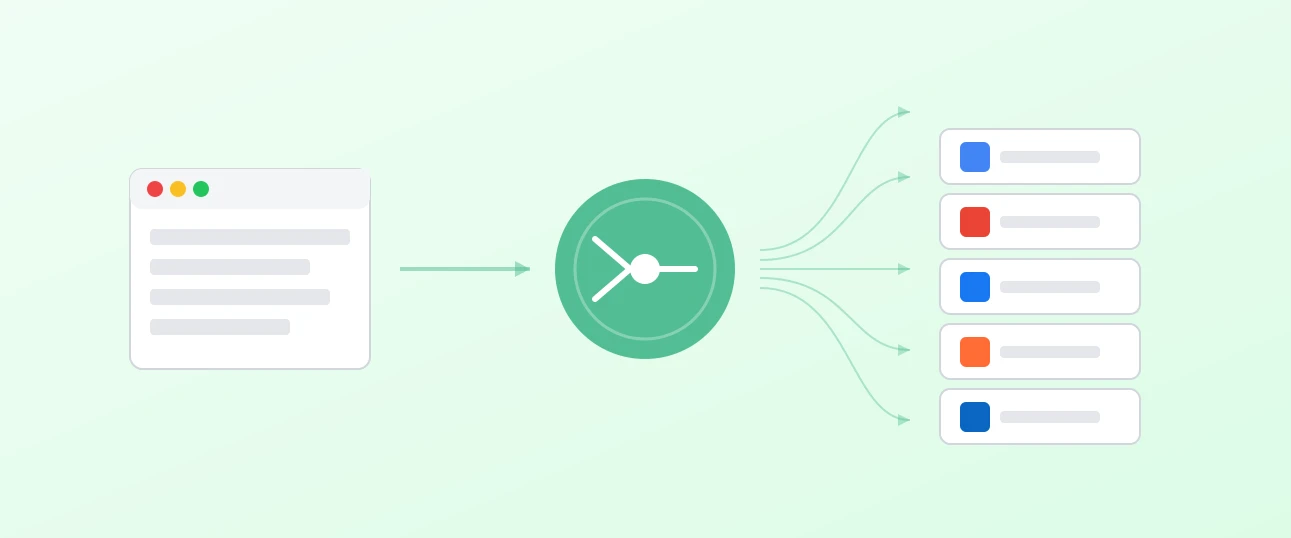
Segment simplifies how you collect and route customer data. Instead of implementing separate tracking for every tool in your stack, you collect data once through Segment and send it wherever it needs to go.
But Segment is more than a data router. It's a foundation for clean, consistent customer data that powers your analytics, marketing, and product tools.
DATA HIT implements Segment properly from the start, giving you a single source of truth for customer data across your entire stack.
The Problem: Every Tool Wants Its Own Tracking
Each platform in your stack has its own SDK, its own implementation, and its own version of your customer data. GA4 sees one thing, your email platform sees another, and your product analytics tells a different story.
Adding a new tool means another implementation. Removing one means hunting through code to clean it up. Your developers spend more time on tracking than on product work, and data consistency is a constant battle.
The Solution: One Integration to Rule Them All
Segment acts as a single collection point for customer data. Implement tracking once, then route that data to any destination you connect, whether that's analytics, advertising, email, CRM, or your data warehouse.
When you add a new tool, you connect it to Segment and the data flows automatically. When you remove one, you disconnect it without touching your codebase. Your tracking implementation stays clean while your stack evolves.
What I Can Help With
Whether you're implementing Segment for the first time or improving an existing setup, I can help with:
- Initial implementation including source setup, tracking plan design, and core integrations
- Tracking plan development to define events, properties, and naming conventions that scale
- Destination configuration for analytics, advertising, email, CRM, and data warehouse tools
- Identity resolution to unify anonymous and known users across touchpoints
- Data quality improvements including schema enforcement and validation
- Migration from existing tracking to consolidate fragmented implementations into Segment
- Governance to maintain data quality as your team and tracking needs grow
Benefits
Implement Tracking Once
No more duplicating tracking code for every tool. Collect data once through Segment and send it to every platform that needs it.
Add and Remove Tools Easily
Connect a new destination in minutes without developer time. Remove old tools cleanly without leaving orphaned code behind.
Consistent Data Everywhere
Every tool receives the same events with the same properties. No more reconciling different versions of your data across platforms.
Clean Customer Profiles
Segment's identity resolution connects user activity across sessions and devices, giving you a unified view of each customer.
Tracking Plan Design
A tracking plan is the foundation of any successful Segment implementation. It defines what you track, how you name it, and what properties you include, ensuring consistency as your tracking evolves.
Why it matters
Without a tracking plan, event names drift, properties vary between platforms, and your data becomes difficult to analyse. With a well-designed tracking plan, your data stays consistent and your team knows exactly what to implement.
What it covers
A tracking plan documents every event you track: page views, user actions, transactions, and custom events. For each event, it specifies the properties to include, their data types, and whether they're required or optional.
Our approach
DATA HIT develops tracking plans tailored to your business goals, documenting them in a format your team can use and maintain. The result is a clear specification that keeps your tracking consistent as your business and tooling evolve.
Part of the Bigger Picture
Segment connects to the rest of your measurement and marketing stack. It often works alongside:
- Google Analytics 4 as an analytics destination
- Amplitude for product and behavioural analytics
- Data warehouses like BigQuery, Snowflake, or Redshift for centralised analysis
- Marketing platforms including email, advertising, and CRM tools
Whether you need a standalone Segment implementation or it's part of a wider data infrastructure project, I'll make sure it integrates properly with your existing tools.
Frequently Asked Questions
Is Segment worth it for smaller businesses?
Segment offers a free tier that works well for early-stage companies. It becomes increasingly valuable as your stack grows and you add more tools. If you're already wrestling with multiple tracking implementations, Segment can simplify things significantly.
How does Segment compare to Google Tag Manager?
GTM manages tags that run in the browser. Segment is a customer data platform that collects data and routes it to destinations via APIs. They serve different purposes and many businesses use both: GTM for browser-based tags and consent management, Segment for data collection and routing.
Can you migrate our existing tracking to Segment?
Yes. I can audit your current implementation, design a tracking plan that captures what you need, and migrate your tracking to Segment while maintaining data continuity. This often results in cleaner, more maintainable tracking than what you had before.
What does implementation involve?
Implementation includes source setup, tracking plan design, destination configuration, and testing. For businesses with existing tracking, it also includes migration planning and execution. Typical timelines are 2-4 weeks depending on the number of sources and destinations.
Ready to Simplify Your Data Collection?
Stop implementing the same tracking over and over. Book a discovery call to discuss how Segment can unify your customer data.